Steer Microsoft 365 Copilot and Copilot Studio agents with Artifact directives
Add Artifact as an MCP tool in a Copilot Studio agent, then publish it to Microsoft 365 Copilot so answers check current company boundaries before they reach employees or customers.
Create a private Artifact token, add Artifact as an MCP tool in a Copilot Studio agent with the token in an Authorization header, then publish the agent to Microsoft 365 Copilot. Copilot Studio builds the agent; Artifact supplies versioned direction before consequential answers.
For: Teams building agents in Microsoft Copilot Studio, or publishing them into Microsoft 365 Copilot, who need owned company rules to apply before responses ship.
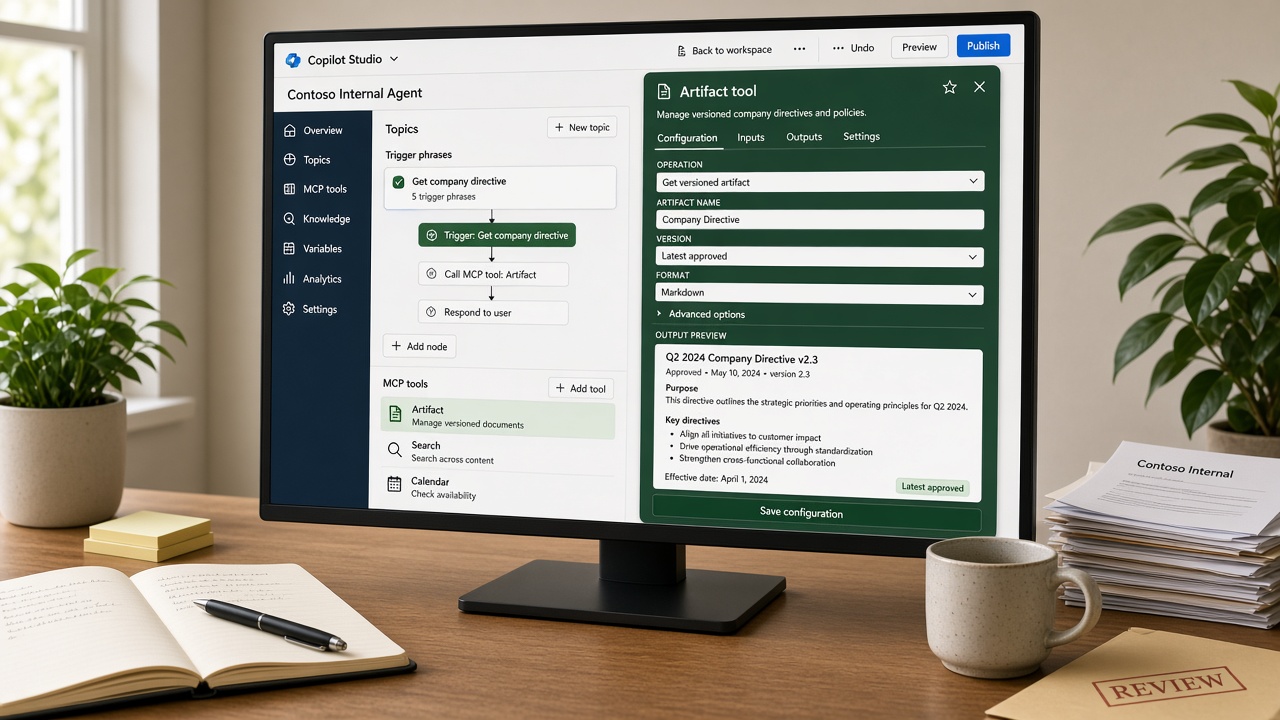
Studio builds the agent. Artifact owns the changing rule.
Topics and instructions define how the copilot works. Discount limits, data boundaries, and exception owners change on a business cadence—those belong in Artifact, retrieved before the draft.
MCP, not another prompt paste
Point Copilot Studio at Artifact over MCP with a private token. Keep client instructions focused on when to retrieve direction and record the receipt.

Same profile as Claude and Cursor
One workspace directive can govern Copilot Studio alongside Claude, ChatGPT, and Cursor—or you can scope it to named connections.
Can the copilot promise a custom data-retention period?
Offer a shorter retention period if it helps the renewal.
Do not promise a custom period. Capture the request and route it to Security and Legal.
Applied directiveCustom retention commitments require Security and Legal approval
What is awesome about Copilot Studio + Artifact
Topics and instructions define how the copilot works. Discount limits, data boundaries, and exception owners change on a business cadence—those belong in Artifact, retrieved before the draft. Keep hard permissions in the vendor stack; use Artifact for owned priorities, boundaries, and exceptions that change faster than a prompt file.
- Copilot Studio remains the agent surface your team already trusts.
- Artifact returns the matching directive version before the response.
- Receipts show outcome and version without storing raw transcripts.
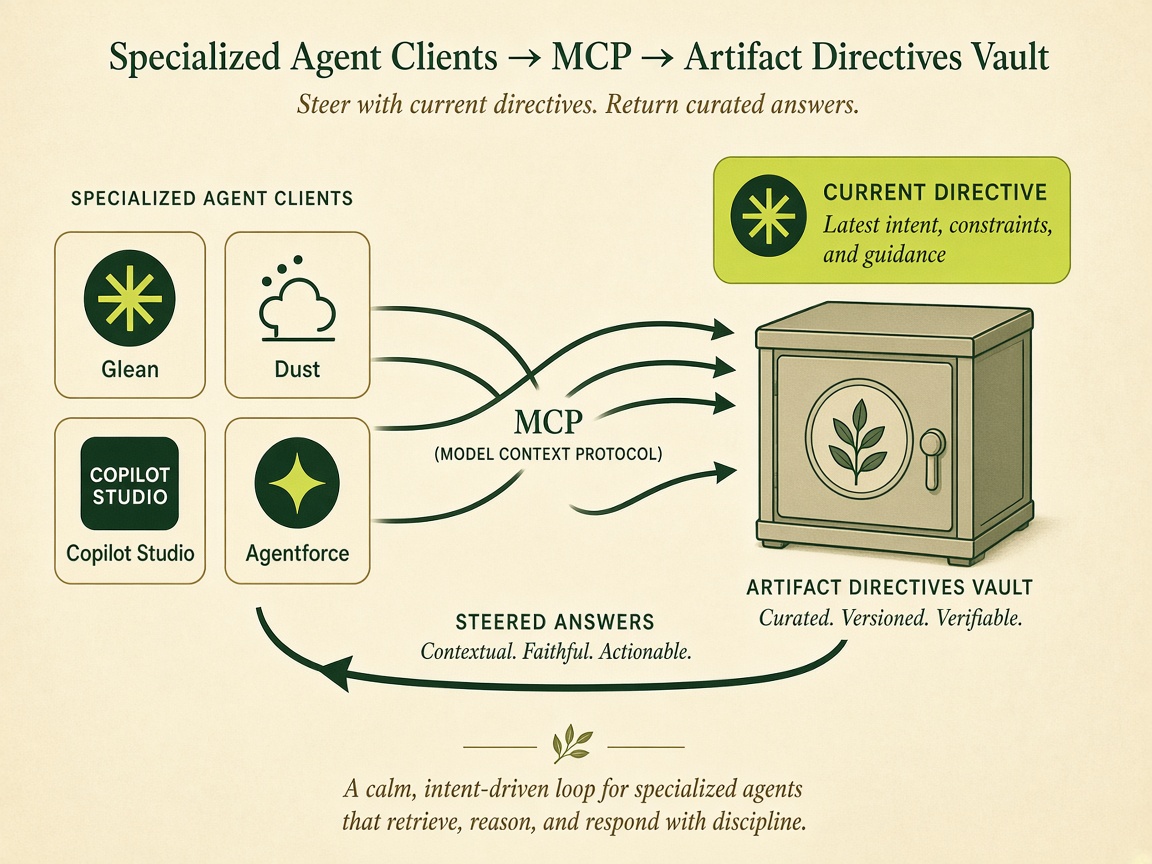
How to connect
Create a token in Artifact, add the MCP server in Copilot Studio using the values below, save the Artifact workflow in instructions, and run one verification task that should hit a live directive.
- Limit tools to Artifact steering and receipt methods when the client allows.
- Verify the interaction appears in Artifact before rolling out broadly.
- Update the directive when policy changes—do not edit every agent prompt.
Where it wins
Consequential answers that should respect approval limits, data boundaries, ICP focus, or review gates—especially when the agent also retrieves internal knowledge.
- Commercial exceptions and discount ceilings.
- Customer-data and retention boundaries.
- Launch, legal, or finance gates with named owners.
Connector values
- Server URL
- https://app.artifactcomputing.com/mcp
- Authentication
- API key, Type Header, header name Authorization Choose these in the MCP wizard
- API key value
- Bearer YOUR_ARTIFACT_TOKEN Private token from Artifact. Keep the word Bearer.
Replace the placeholder with a private token created inside your Artifact workspace. Do not publish or share the token.
Frequently asked questions
Is Artifact a replacement for Copilot Studio or Microsoft 365 Copilot?
No. Copilot Studio and Microsoft 365 Copilot remain the agent surfaces. Artifact is the steering layer for current company direction.
Where is the vendor setup documented?
Use Microsoft’s Copilot Studio documentation for the product steps. This page covers the Artifact URL, token, and steering workflow.
Can I steer an agent built with the Microsoft 365 Agents Toolkit instead?
Not with an Artifact token. MCP actions in those declarative agents support Microsoft Entra single sign-on, OAuth, dynamic client registration, or no authentication, and do not take an API key. Build the agent in Copilot Studio and publish it to Microsoft 365 Copilot.
Can directives be scoped only to Copilot Studio?
Yes. A directive can apply company-wide, to a team, or to named agent connections.
Does Artifact store the conversation?
No. Artifact records directive versions, outcomes, latency, and token counts—not raw prompts or replies as receipt content.